
Safely visiting Komodo dragon Information is an incredible experience, but safety is paramount. Always explore with a Licensed Local Guide who carries a forked stick, keep a distance of 3–5 meters, avoid sudden movements, and immediately report if you are bleeding or menstruating to prevent unwanted attention from these apex predators
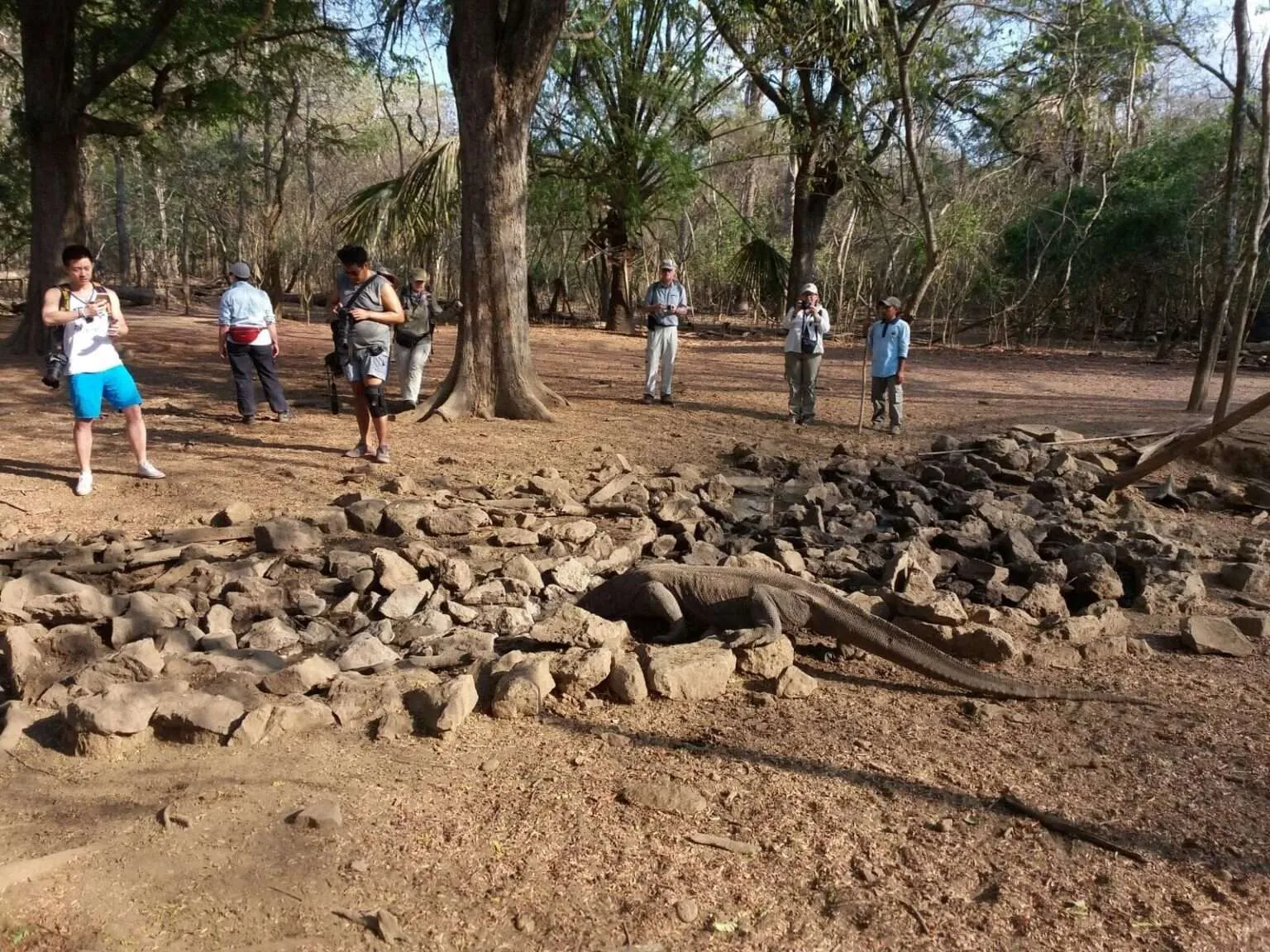
Core Rules for Safe Encounters (Komodo Dragon Safety Information)
- Never Trek Alone: Official Park rules require you to be accompanied by a licensed park ranger.
- Maintain Distance: Stay at least 3–5 meters (10–15 feet) away. Even sleeping dragons can react and move at speeds up to 20 km/h (13 mph).
- Manage Fragrances: Dragons can smell blood from up to 5 kilometers away. If you have an open wound or are menstruating, tell your guide immediately so they can monitor you closely. Do not wear strong perfumes.
- No Sudden Movements: Avoid loud noises and abrupt actions that might trigger their chase response.
- Watch Your Belongings: Do not drop items, as dragons may mistake them for food.
- Wear Sturdy Shoes: Open-toe footwear is not allowed. Wear secure, closed-toe trekking shoes.
Emergency Survival Tactics Komodo dragon
- Run Zig-Zag: If chased, run in a zig-zag pattern. Dragons can reach speeds of 20 km/h (13 mph) but have difficulty turning quickly.
- Seek High Ground: Climbing a stilt house or large rock can provide safety from adult dragons, though young dragons can climb trees.
- Fight Back: If attacked, target sensitive areas like the eyes, nostrils, or the inside of the mouth with a branch or rock.
- Immediate Medical Care: A bite delivers venom that prevents blood clotting and induces shock. Seek hospital treatment immediately to prevent fatal blood loss or infection
If a Komodo Dragon Approaches or Attacks
- Stay Calm: Do not panic or scream.
- Back Away Slowly: Never turn your back or run in a straight line if one starts charging. If chased, run in a zig-zag pattern, as their large bodies make it difficult for them to turn quickly.
- Seek High Ground: Climb a large rock or a stilt house if possible, as adult dragons struggle to climb. (Note: Juvenile dragons can climb trees).
- Fight Back: If a dragon corners you, use a hiking stick, backpack, or any object available to hit its snout or eyes to defend yourself
Why Their Bites are Dangerous komodo
Komodo dragons have serrated teeth and deliver toxic venom that prevents blood from clotting and induces shock. If you are bitten, seek medical attention immediately. The bacteria in their mouths can cause severe infections, making professional wound treatment and anti-venom/antibiotics essential
Safe Preparation – Komodo Island
- Footwear: Wear sturdy, closed-toe shoes for trekking on uneven, rocky terrain.
- Clothing: Choose neutral-colored clothing and avoid bright colors that might attract attention.
- Health: Ensure vaccinations (Hepatitis A, Typhoid) are up to date and carry a basic medical kit