
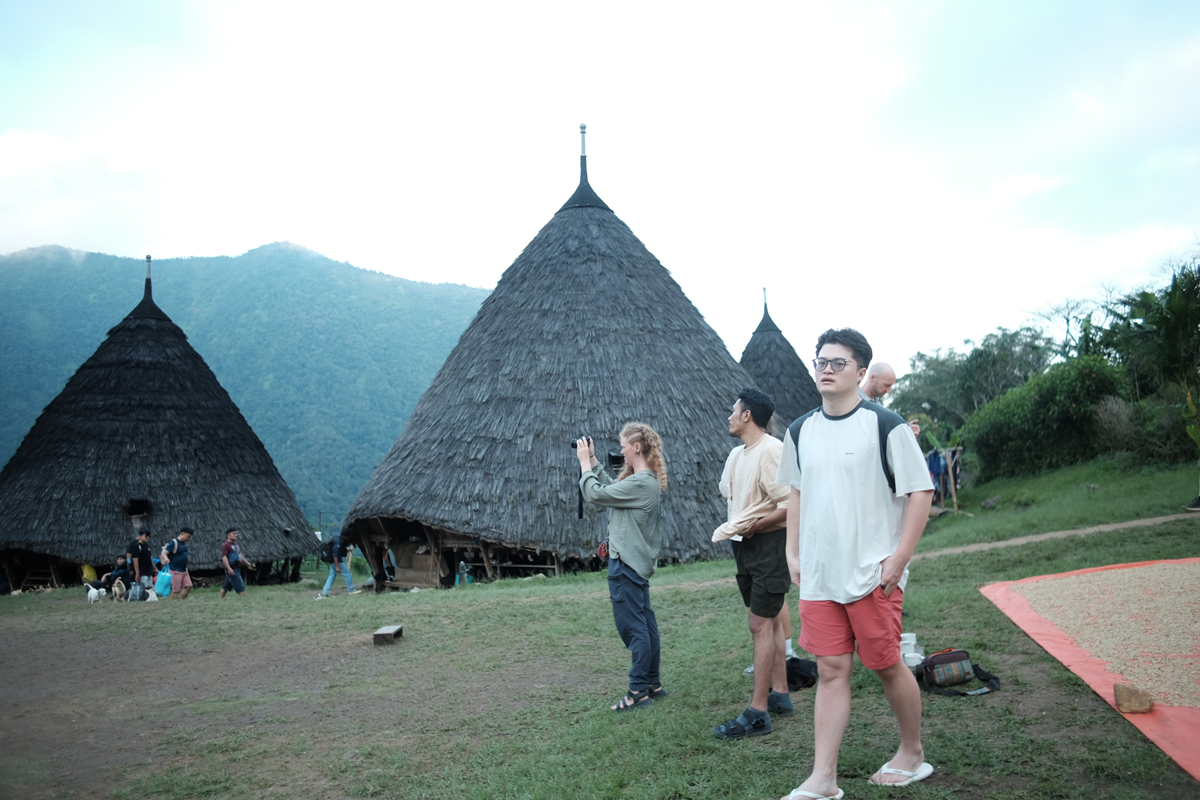
Wae Rebo Labuan bajo is a traditional, UNESCO-recognized mountain village in Flores, Indonesia. Located 1,100 meters above sea level, it is famous for its iconic, cone-shaped traditional houses called Mbaru Niang.

How to Get There from Labuan Bajo
- By Car: Take a 4-to-5-hour drive (about 110 km) from Labuan Bajo to Denge Village, which is the starting point of the trek.
- Trekking: From Denge, you must hike for about 2 to 3 hours through lush rainforest and uphill terrain to reach the village.
What to Expect
- Digital Detox: There is no mobile reception in Wae Rebo, and electricity is only available in the evenings (6:00 PM to 10:00 PM).
- Accommodation: Visitors typically stay overnight in a shared, traditional conical house, allowing for an authentic cultural exchange with the local community.
Planning Your Trip
- Best Time to Visit: The dry season (April to October) offers clearer skies and safer, less muddy trekking conditions.
- Booking: To organize transport, guides, and permits out of Labuan Bajo, book a trip using reputable services
Wae Rebo is a unique cultural treasure in the mountains of Flores. The journey to experience way of life, hard to find anywhere else in the world:

Iconic Architecture
- Cone Houses: You will see seven unique, five-story conical houses called Mbaru Niang.
- UNESCO Recognition: The village received the UNESCO Award of Excellence in 2012 for preserving its architectural heritage.
- Ancient Design: built without nails, using traditional rattan binding techniques.
Cultural Immersion
- Welcoming Ceremony: Elders welcome you with a traditional Waelu ritual to grant you safe passage and blessings.
- Overnight Stay: You sleep inside a Mbaru Niang on woven mats, sharing space with other travelers and locals.
- Local Coffee: You can taste and buy organic Arabica coffee harvested right in the village.
Natural Beauty & Adventure
- Scenic Trekking: The 3-hour hike takes you through dense, misty rainforests alive with tropical birds.
- Stargazing: Zero light pollution offers breathtaking views of the Milky Way on clear nights.
- Mountain Vistas: The village sits 1,100 meters above sea level, surrounded by dramatic, jagged peaks.
What is Wae Rebo unique Place
1. The Symbolic 5-Level Architecture wae rebo village
Each of the 7 cone-shaped houses stands exactly 15 meters tall, built completely without nails using lightweight bamboo frameworks tied with rope. They feature five distinct interior levels, each representing a unique step between the physical and spiritual worlds:
Legenda Khatulistiwa +3
- Level 1 (Lutur): The ground floor where multiple extended families live and eat together.
- Level 2 (Lobo): The attic used strictly for storing daily food and goods.
- Level 3 (Lentar): A dedicated level to secure seeds for future planting seasons.
- Level 4 (Lempa Rae): emergency food stocks
- Level 5 (Hekang Kode): The highest, most sacred level used to place offerings for ancestral spirits.
2. Unique Customs & Way of Life wae rebo village
- The Sacred Number Seven: The village isconsist of 7 House. These correspond to the seven mountain peaks that encircle and protect the community.
- The Waelu’u Welcome: You cannot take photos or explore on your own upon arrival. A village elder must first lead you through the Waelu’u ritual in the main house to ask the ancestors for your safe passage.
- The Central Compang: The houses form a perfect circle around the Compang, a sacred stone altar where all major spiritual rituals and thanksgiving dances take place.
- Minangkabau Roots: Local lore says the villagers are the 18th-generation descendants of Empu Maro, a friar from West Sumatra who fled to these remote mountains centuries ago.
Standard 2-Day, 1-Night Itinerary wae rebo traditional village
Day 1: Labuan Bajo to Wae Rebo
-
- 05:30 AM: Early morning pick-up from your hotel.
- 06:00 AM – 11:00 AM: 5-hour drive to Denge Village, with short stops at sights like the Lembor Rice Terraces
- 11:00 AM – 12:00 PM: Lunch in Denge Village.
- 12:30 PM – 03:00 PM: A short motorbike shuttle to the trailhead, followed by a 2.5 to 3-hour uphill hike to Wae Rebo.
- Evening: Traditional welcome ceremony, local dinner, stargazing, and an overnight stay in a shared Mbaru Niang cone house.
Day 2: Wae Rebo back to Labuan Bajo
-
- Morning: Sunrise views over the misty mountains, local coffee, and breakfast.
- 08:00 AM – 10:00 AM: 2-hour hike back down to Denge Village.
- 11:00 AM – 05:00 PM: Return drive to Labuan Bajo, often stopping at the famous Cancar Spider Web Rice Fields.